A Beginner’s Guide to Mindful Looking: Slow Down and See More
A Beginner’s Guide to Mindful Looking: Slow Down and See More
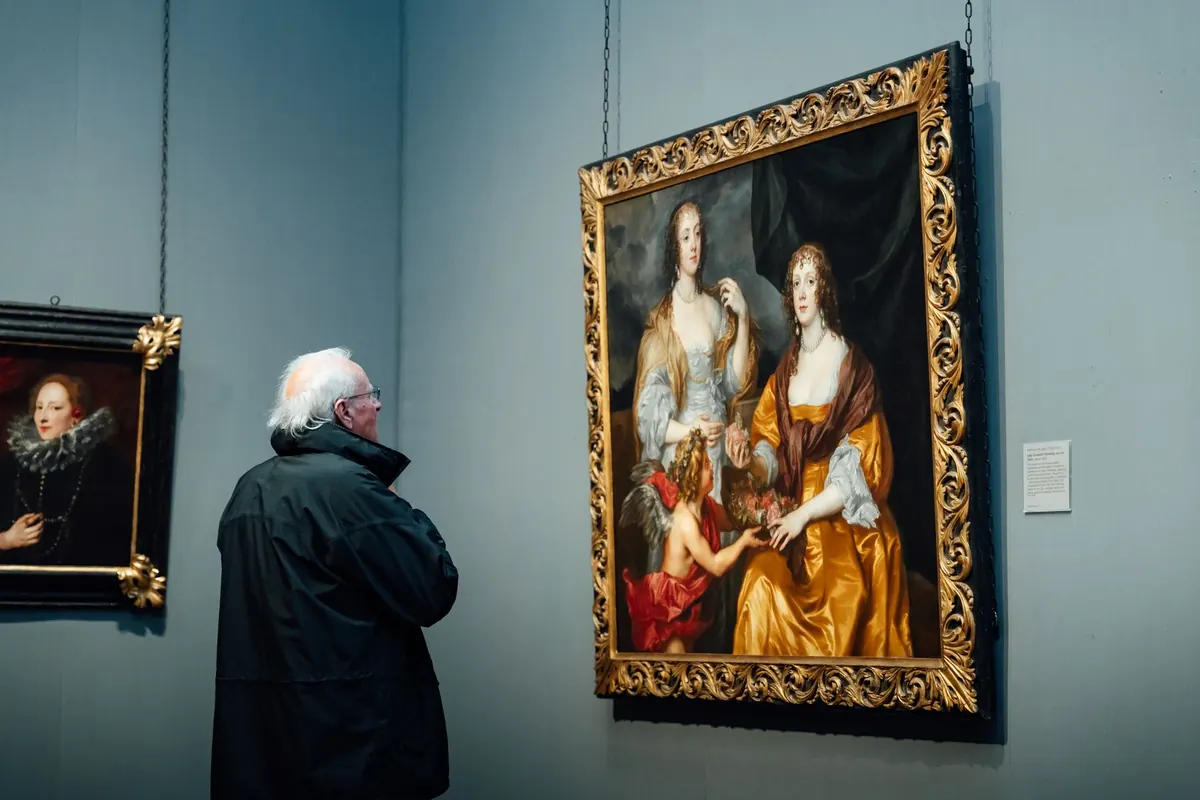
Think of the last time you stood in front of something made to be looked at — a photograph in a gallery, a poster at a bus stop, a painting you had crossed town to see. You read the label. You stepped back. You checked the time. Then you moved on, with the vague sense of having been near something rather than with it.
That gap between seeing and looking is where this practice starts. Mindful looking isn't a talent handed out with art degrees, and it isn't a test you can fail. It's a set of small, repeatable habits that slow your attention down long enough for an image to register. The exercises below take minutes. What they build takes longer.
Looking Is a Skill, Not a Verdict
Most of us approach an unfamiliar image as a question we're about to get wrong. What does it mean? Is it any good? Why is this here? The anxiety is quiet but efficient: it pushes attention straight from the object to the verdict, and the object gets skipped.
Try reversing the order. Description first, interpretation later — sometimes much later. Description is the part you can't fail, because you're the one holding the evidence. Two people stand in front of the same photograph. One says, "I don't get it." The other says, "The light in the top-left corner is doing all the work, and the figure is almost in shadow." The second person isn't cleverer. They stayed a moment longer and let their eyes report back.
A useful rule for beginners: for every opinion you form, be able to name three things you actually saw.
Description is not the opposite of feeling. It is how feeling finds something to hold on to.
The Thirty-Second Start
Pick one object: a photograph on your wall, a page of a magazine, the label on a bottle of olive oil. Nothing loaded. Set a timer for thirty seconds and put your phone face down, out of reach.
During those thirty seconds:
- Take in the whole thing without naming it. Resist the labels — portrait, advert, abstract — for now. Let the shape land.
- Name five concrete things. Not "beautiful", not "sad". Concrete: a diagonal shadow, a knuckle, three repeated circles, a smudge of blue near the bottom edge.
- Notice where your eye keeps returning. It will go somewhere more than once. That pull is information — often what the image is built around, or what you personally can't leave alone.
- Stop when the timer goes. Don't push to a full minute on the first attempt.
Thirty seconds will feel longer than you expect, and faintly awkward. That awkwardness is the sound of an old habit loosening. Most of what we call not being interested in an image is simply not having given it enough time to become interesting.
If you try this with a friend, resist the urge to compare results. One person might list "red, round, shiny." The other might spot a tiny reflection in a window and a crack in the pavement below it. Both are right. The exercise isn't about finding the best detail. It's about giving your eyes a job that isn't judging.
Three Passes: Whole, Detail, Edge
Pass one: the whole
Squint until the image goes soft. What holds the shape together? Where are the darkest and lightest areas? Is the composition weighted to one side, centred, or deliberately off-balance? Squinting shuts out fine detail so you can read structure — the same move as stepping back from a painting you've been standing too close to.
Pass two: the detail
Now go the other way. Choose a patch the size of a postage stamp — a face, a fold of cloth, a corner of sky — and describe it in plain words. Count things. Notice small repetitions, small breaks in pattern. Detail is where images are most generous, and where most of us never bother to go.
In a portrait, the detail might be the place where a collar meets a neck, or a single strand of hair that escapes. In a landscape photograph, it might be the gap between two hills or the almost-white patch of sky above a roof. These are not hidden meanings. They are evidence.
Pass three: the edge
Almost nobody looks at edges, and edges are where the decisions live. What's cut off by the frame — a hand, a doorway, the rest of a body? Is the frame tight or loose? Does the image feel like a window or a world deliberately cropped? Edges tell you what the maker chose to exclude, and that's often as revealing as what's included. A photograph that crops a face at the chin is making a different claim from one that leaves a metre of empty wall above the head. You don't have to decide whether the claim works. First, notice that it's there.
When Nothing Happens
Sometimes you'll do all three passes and feel nothing. That is not failure. Some images simply don't speak to you today, and some reward a second visit more than a first. Before you walk away, try three plain questions: What is the brightest thing here? What is the busiest area? What is missing?
The last question is often the most useful. A crowded street scene with no faces. A table set for a meal with no food. A landscape with no horizon. Absence is not empty space; it is a choice, and choices can be read.
If you still feel nothing, give yourself permission to move on. Mindful looking is not a penance. But try one more small move first: look away at a blank wall for five seconds, then look back. The reset is cheap, and it often makes the image visible again.
A Short Vocabulary of Noticing
You don't need art-history terms to look carefully, but a few plain categories can keep your attention from drifting. Use one at a time, not all at once.
- Light: Where is it coming from? Is it soft or hard? Does it flatter the subject or expose it?
- Line: Follow the strongest line in the image. Where does it lead? Does it stop, curve, or disappear off the edge?
- Repetition: What shape appears more than once? Windows, hands, circles, shadows. Repetition creates rhythm — and interruption creates tension.
- Scale: How big is the subject compared with everything around it? A figure dwarfed by a building tells a different story from a figure filling the frame.
- Absence: What has been left out? Empty space, missing faces, a horizon that never arrives.
Pick one category per image. If you notice light first, stay with light for the full thirty seconds. You are not trying to produce a complete reading. You are practising the act of returning.
Taking It Into the World
Mindful looking isn't confined to galleries. It works on supermarket shelves, bus windows, the cover of a book someone left on a bench, the face of a stranger in a crowd. The world is full of images that were designed to be glanced at. Looking at them slowly is a small act of resistance.
Try a five-minute looking loop on your next walk:
- Choose one thing you'd normally walk past.
- Stand still for ten seconds.
- Name one color, one shape, one texture.
- Ask what your eye returns to.
- Leave.
That's it. No notebook required, though a notebook helps. A sentence a day about something you noticed will train your attention faster than a monthly museum marathon.
The Point Is Not to Become an Expert
The goal of mindful looking is not to have better opinions. It is to have a slightly more crowded inner life — to walk past a poster and actually see the poster, to stand in front of a photograph and feel the time you gave it. You will become harder to bore. You will also become slower to dismiss things that don't announce themselves immediately.
Start with thirty seconds. Name five things. Look at the edge. Then go back to your day, a little more awake than you were.
Photo: Mondschwinge / Pixabay
You Might Also Like
A practical look at when the phone in your pocket beats the camera in your bag for daily visual storytelling — and when it quietly falls short.
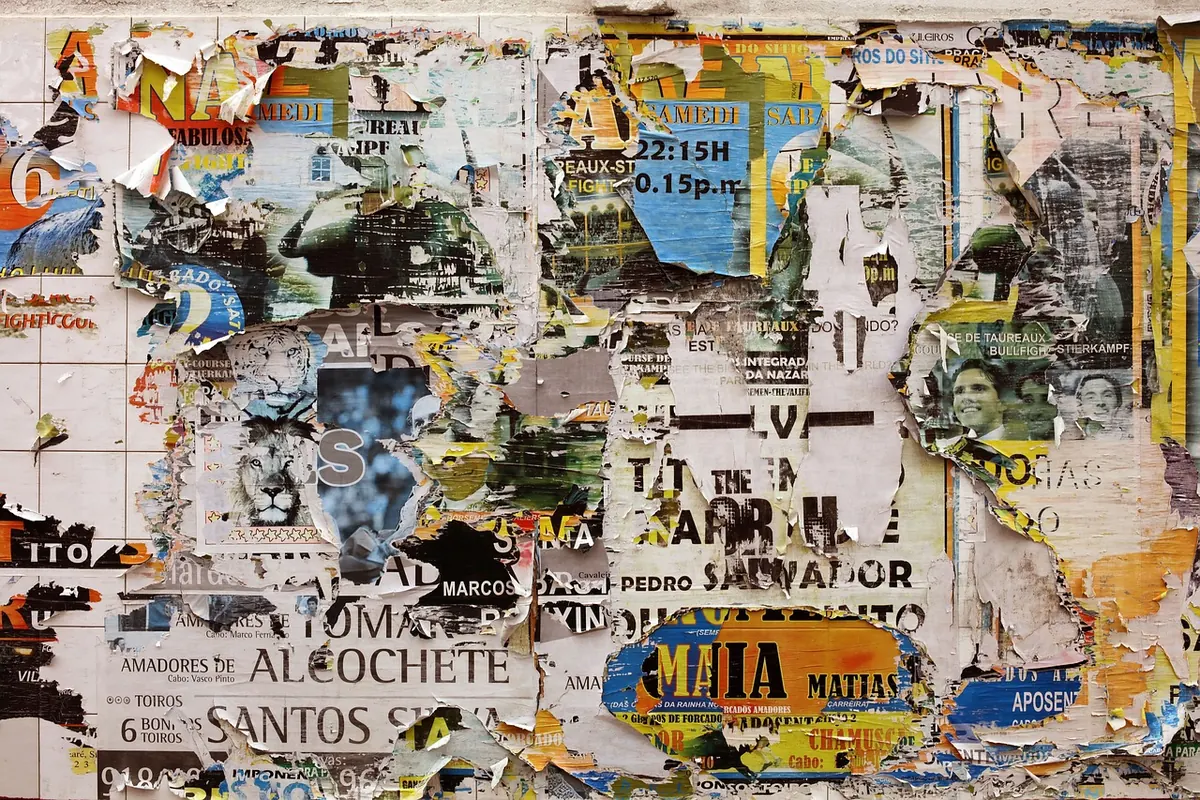
Street posters are the least curated layer of a city’s visual life — a record of who speaks, how loudly, in what typeface, and to whom.